
Guardsman Air Duct Cleaning in Columbus: A Homeowner’s Guide
Guardsman antimicrobial duct treatments in Columbus typically cost $100–$200 as an add-on service, but most residential systems don’t need them unless there’s confirmed mold growth or persistent microbial contamination after mechanical cleaning. If you’re being offered a Guardsman treatment at the end of a standard duct cleaning, you should ask what specific evidence justifies it — because in our 8 years of doing this work across Columbus, we’ve found that honest recommendations are the exception, not the rule. If you’d rather talk through whether your system actually needs treatment, call us at (844) 945-2561 — estimates are free, and Paul Torres shows up personally as lead technician on every job.
What Guardsman Products Actually Are (And What Each One Does)
Guardsman isn’t a single product — it’s a brand line that includes encapsulants, antimicrobial coatings, and duct sealants, each designed for a different problem. Columbus homeowners rarely hear the distinction, and that’s where upsells happen.
Here’s what you’re actually being sold:
- Guardsman antimicrobial treatments — Biocides applied to the interior duct surface to inhibit mold, bacteria, and fungal growth. These are registered pesticides under EPA guidelines and should only be used where there’s documented microbial contamination.
- Guardsman encapsulants — Thick coatings that seal porous duct surfaces, typically used in fiberglass-lined ductwork where the lining has degraded. This is a repair-grade application, not a routine cleaning add-on.
- Guardsman duct sealants (aerosol-based) — Used to close leaks in the duct system itself. This is fundamentally an energy-efficiency measure, not a cleaning step, though some Columbus contractors bundle it post-cleaning.
The critical point: these products solve different problems. A technician recommending “Guardsman treatment” without specifying which product and why is either poorly trained or deliberately vague. In our work across Columbus neighborhoods from Clintonville to Grove City, we’ve seen homeowners pay for antimicrobial treatments when their actual issue was leaky flex duct — or pay for encapsulants when a simple mechanical cleaning with our Rotobrush and Nikro systems would have solved the dust problem entirely.
We use Honeywell and Aprilaire air quality monitoring tools during our pre-cleaning inspection to document what we’re actually dealing with. If we don’t find microbial growth, we don’t sell antimicrobial treatment. Period.
When Antimicrobial Treatment Is Actually Warranted
There are legitimate cases for Guardsman antimicrobial application in Columbus homes, but they’re narrower than most homeowners realize.
We recommend antimicrobial treatment only when we can document one of these conditions:
- Visible mold growth inside hard duct surfaces — not dust, not discoloration, but confirmed fungal growth that survives mechanical agitation and vacuum extraction.
- Confirmed bacterial contamination — typically after water intrusion events, flooding in basements (common in Columbus’s older homes near the Scioto River floodplain), or prolonged HVAC shutdown with moisture accumulation.
- Persistent musty odor that survives thorough mechanical cleaning — but only after we’ve ruled out dead rodents, standing water in the plenum, or contaminated insulation that needs removal, not coating.
Here’s what doesn’t justify antimicrobial treatment: routine dust accumulation, seasonal allergies, a standard amount of pet dander, or “preventive” application after a normal cleaning. The EPA is explicit on this — biocides in ductwork should not be used routinely. We’ve cleaned ducts in Columbus homes for 8 years, and we can count on two hands the number of times we’ve genuinely recommended antimicrobial treatment after our mechanical process.
The climate factor matters too. Columbus’s humid summers and freeze-thaw winters create condensation cycles in duct systems, especially in unconditioned attics and crawl spaces. That moisture can support microbial growth — but the fix is usually solving the moisture source and cleaning thoroughly, not coating the ducts with chemicals.
What the EPA Actually Says About Duct Sealants and Biocides
The EPA’s guidance on duct treatments is more cautious than most Columbus homeowners realize, and more cautious than many contractors act. Here’s the straight summary:
The EPA has not registered any biocides for use in internally-lined fiberglass ductwork — the exact material found in many Columbus homes built between 1960 and 1990. That means any antimicrobial treatment in those systems exists in a regulatory gray area, and encapsulants are the only EPA-recognized approach for degraded fiberglass lining.
For sheet metal ducts, the EPA states that biocides “may be applied” only to the interior surfaces, only when there’s documented contamination, and only by applicators following label directions. The agency specifically warns against “routine” application and notes that no biocide has been EPA-registered for use in porous duct materials like flex duct or fiberboard.
On sealants: the EPA has not evaluated aerosol duct sealants for safety or efficacy in residential systems. The agency’s position is that proper duct repair — sealing leaks with mechanical methods, replacing damaged sections — is the preferred approach.
What this means practically: if a Columbus technician is recommending Guardsman products as standard procedure, they’re operating outside EPA guidance. If they’re recommending them without showing you photographic or video evidence of the specific problem, they’re asking you to buy on faith. We’ve built our reputation on Legacy Air Duct Cleaning Columbus home services around the opposite approach — Paul Torres shows you what he finds, explains what it means, and lets you decide.
The Right Questions to Ask Before You Pay for Any Add-On Treatment
After 935 verified reviews and 8 years of doing this work, we’ve learned that educated homeowners make better decisions — and they’re happier with the outcome. Here are the questions that separate honest recommendations from upsells:
“What did you find in my ducts that makes this treatment necessary?”
A good answer sounds like: “We found active mold growth on the sheet metal trunk line in your basement — here’s the photo — and mechanical cleaning removed the visible growth but the spore load remains elevated. An antimicrobial application will address the residual contamination.” A bad answer sounds like: “It’s just good to do after cleaning” or “It’ll keep your ducts cleaner longer.”
“Which specific Guardsman product are you recommending, and what’s its EPA registration number?”
Legitimate biocide applicators know this information. If they don’t, or if they dismiss the question, you’re not dealing with someone who understands what they’re applying in your air stream.
“What happens if I skip this treatment?”
An honest answer for most Columbus homes: “If we did a thorough mechanical cleaning with professional brush-and-vacuum systems, your ducts are clean. Without confirmed microbial contamination, there’s no health or system benefit to adding chemicals.” That’s our standard answer, and it’s why our add-on rate for treatments is under 5% of jobs.
“Can you show me the manufacturer’s safety data sheet?”
Any contractor applying chemicals in your home should have this readily available. We keep SDS sheets for every product we carry, including the rare occasions we use antimicrobial treatments.
Our Honest Policy: When Legacy Recommends Treatment (And When We Don’t)
Paul Torres serves as lead technician on every Air Duct Cleaning in Lewis Center and Columbus job, and our policy on add-on treatments is simple: we don’t sell what isn’t needed.
Here’s how it actually works in practice:
- Every job starts with a camera inspection — we show you what your ducts look like before we touch anything.
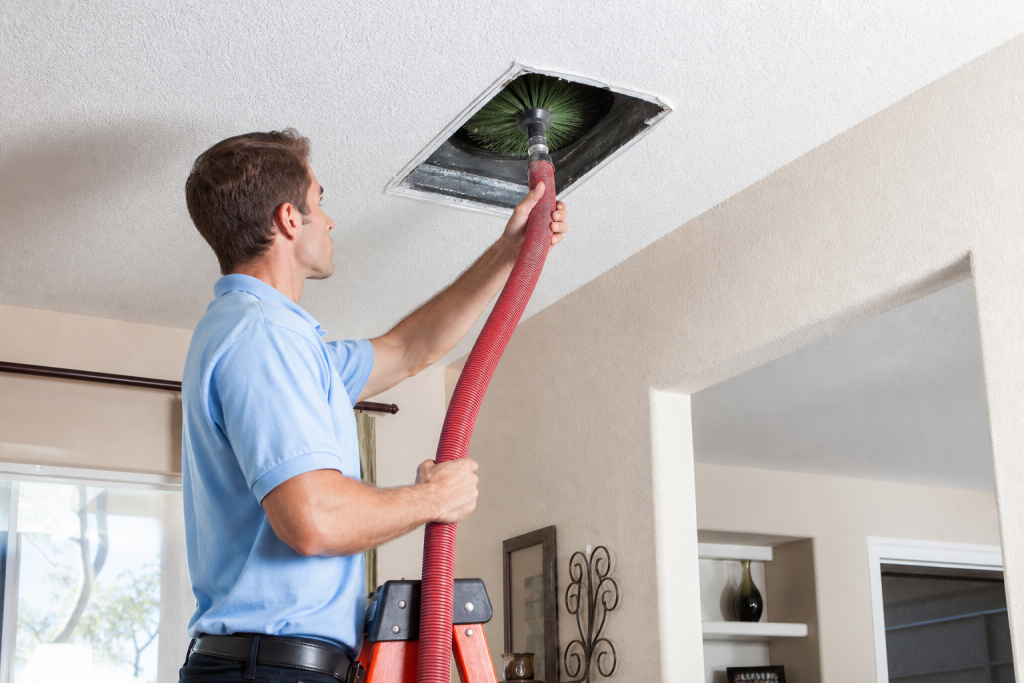
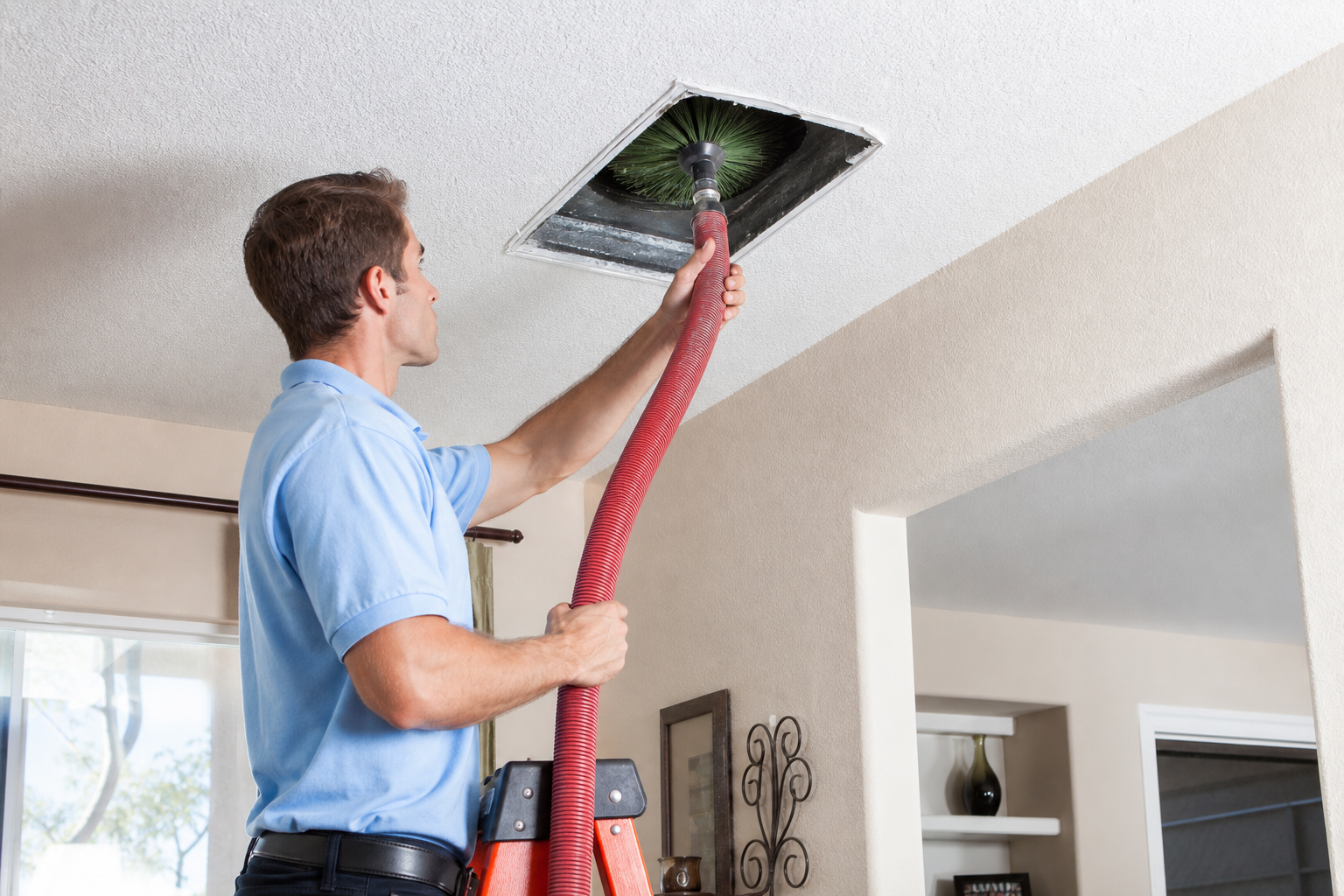
- Mechanical cleaning uses our professional-grade Rotobrush and Nikro systems — the same platforms industrial IAQ contractors use, not shop-vac adaptations. This removes the overwhelming majority of contaminants physically.
- Post-cleaning inspection confirms what remains. If it’s clean metal or intact flex duct, we’re done.
- Only if we find documented microbial growth that survives mechanical removal do we discuss treatment options — and we explain exactly what we’re proposing, why, and what the alternatives are.
In 8 years and nearly 1,000 customer reviews, we’ve recommended antimicrobial treatment on fewer than 50 jobs. When we do, it’s because the evidence supports it, not because it pads the invoice.
We also handle Dryer Vent Cleaning in Lewis Center and HVAC Cleaning in Lewis Center with the same standard — one company for your entire duct system, with the owner personally accountable for every recommendation.
The Bottom Line
Guardsman products have their place in duct maintenance, but that place is smaller and more specific than most Columbus homeowners are led to believe. The honest truth: a thorough mechanical cleaning with professional brush-and-vacuum systems solves the actual problem in 95% of residential duct systems. Antimicrobials, encapsulants, and sealants are repair-grade tools for specific documented conditions — not routine add-ons.
Before you pay $100–$200 for a Guardsman treatment, ask what evidence justifies it. The right answer is specific, visual, and tied to a problem that mechanical cleaning couldn’t solve. The wrong answer is vague, pressure-based, or framed as “standard procedure.”
If you’re in Columbus and want a second opinion on whether your ducts actually need treatment — or just need honest, thorough cleaning from someone who’ll tell you when you don’t — call (844) 945-2561 for a free estimate. Paul Torres shows up personally as lead technician, and we’ll show you exactly what we find before recommending anything.
Frequently Asked Questions
No. In our 8 years of cleaning ducts across Columbus, we’ve found that professional mechanical cleaning with brush-and-vacuum systems removes the contaminants that actually affect air quality in nearly all residential systems. Antimicrobial treatment is only warranted when there’s confirmed microbial growth that survives mechanical removal. If a technician presents it as standard, ask what specific evidence in your ducts justifies the additional cost.
Guardsman antimicrobial treatments typically add $100–$200 to a standard duct cleaning invoice in the Columbus market. Encapsulants for degraded fiberglass ductwork can run higher, depending on the linear footage involved. Before paying, ask which specific product is being applied and what documented problem it’s solving — the cost only makes sense if the treatment is genuinely necessary. Call (844) 945-2561 for an exact quote on your system; estimates are free.
Sometimes, but not reliably. Visible mold around vent registers or a persistent musty odor when your HVAC runs are warning signs, but dust accumulation and normal discoloration can look similar to untrained eyes. Columbus’s humid summer climate does create conditions where mold can develop, especially in basements and crawl spaces. We use camera inspection to document what’s actually present — photos don’t lie, and we show you before recommending any treatment.
Duct cleaning is mechanical — physically removing dust, debris, and contaminants with agitation and vacuum extraction. Duct sanitizing (or antimicrobial treatment) is chemical — applying a biocide to kill or inhibit microbial growth. Cleaning should always come first; sanitizing without thorough cleaning is like disinfecting a dirty countertop — the product can’t reach the actual contamination. In our experience across Columbus, most homes need cleaning only. We reserve sanitizing for the minority of jobs where inspection confirms it’s warranted.
Written by Paul Torres, Owner & Lead Technician at Legacy Air Duct Cleaning Columbus, serving Columbus since 2018.
Need Air Duct Cleaning Help?
Call Legacy Air Duct Cleaning Columbus — licensed & insured, here with fast after-hours help in Columbus.
(844) 945-2561