
Air Duct Sanitizing Service in Columbus, OH: What It Actually Does and When You Need It
Air duct sanitizing service in Columbus runs $275–$495 when performed as a standalone treatment, or $150–$250 as an add-on to a full duct cleaning. The process applies an EPA-registered antimicrobial solution to clean duct surfaces after mechanical agitation, neutralizing mold spores, bacteria, and allergen residue that vacuuming alone can’t address. For a free estimate on your home, call Legacy Air Duct Cleaning Columbus at (844) 945-2561 — we typically book within 48 hours during peak season.
Why Columbus’s Late Summer Makes Sanitizing Non-Negotiable
Columbus ranks among Ohio’s worst metros for ragweed pollen every August through October. Your HVAC system pulls outdoor air in during those weeks. Sanitizing without cleaning first is theatrical. Cleaning without sanitizing during ragweed season is leaving the job half-done.
Here’s the cycle we see in homes across Hilliard, Dublin, and Pickerington: the cooling system runs hard through humid July and August, drawing pollen-laden air through return vents. By September, when nighttime temperatures drop and homeowners switch to heat, that same particulate load — now combined with summer mold spores that colonized in cold supply registers — gets recirculated through every room. The system doesn’t care whether it’s pushing hot or cold air; it’s pushing whatever’s lining your ducts.
Paul Torres, our owner and lead technician, grew up on Columbus’s Near East Side, a few blocks from Franklin Park. He completed his HVAC coursework at Columbus State Community College before shifting his focus specifically to duct systems — the part of the job most contractors overlook. After eight years running Legacy, he’s found that the homes calling us in late August with allergy complaints almost always show the same pattern: mechanical cleaning removes the bulk debris, but biological residue remains on the duct walls. That’s where sanitizing closes the loop.
What Air Duct Sanitizing Actually Is — And What It Isn’t
We get this question enough that it’s worth being direct: sanitizing is not a spray that makes dirty ducts clean. It’s a targeted antimicrobial treatment applied to surfaces that have already been mechanically cleaned.
The proper sequence runs like this:
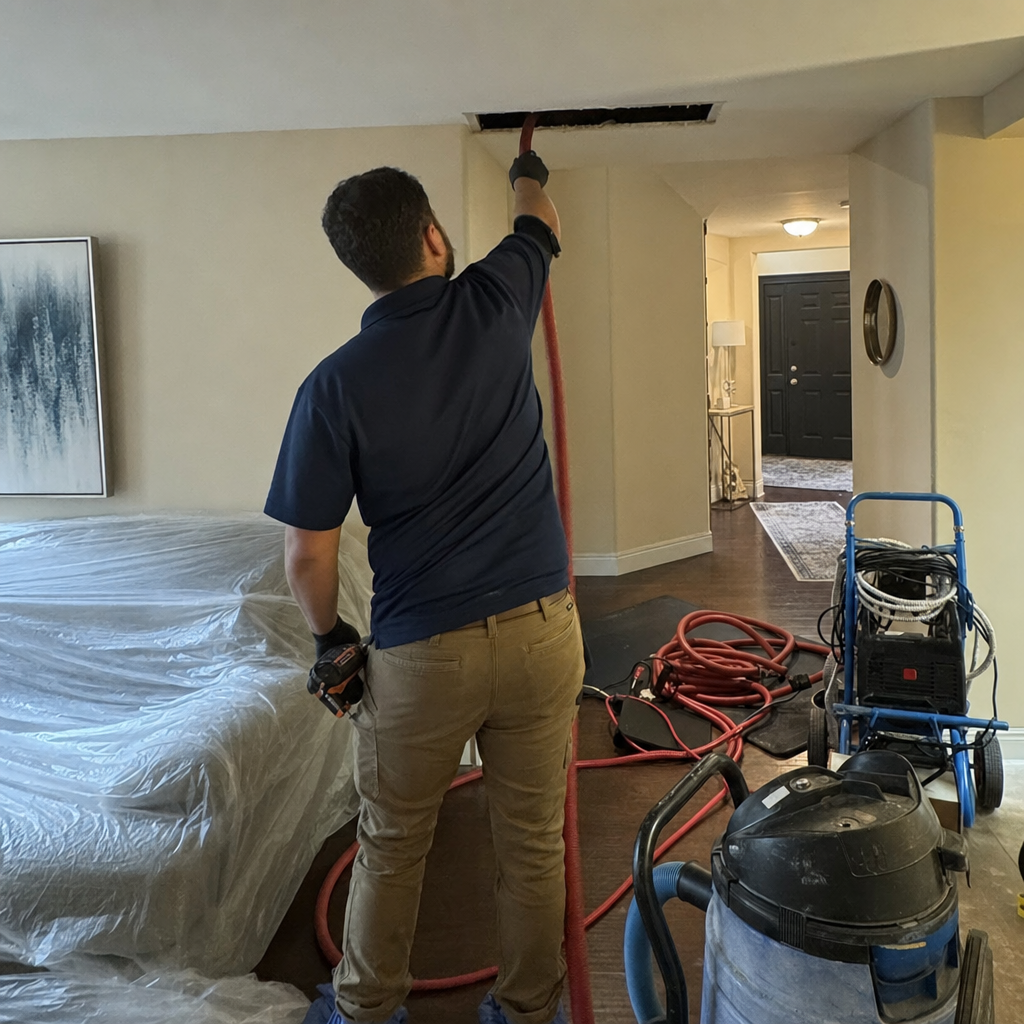
- Mechanical agitation with a Rotobrush or Nikro system dislodges particulate, dust, and construction debris from duct walls
- Negative-pressure vacuum extraction removes the loosened material from the system
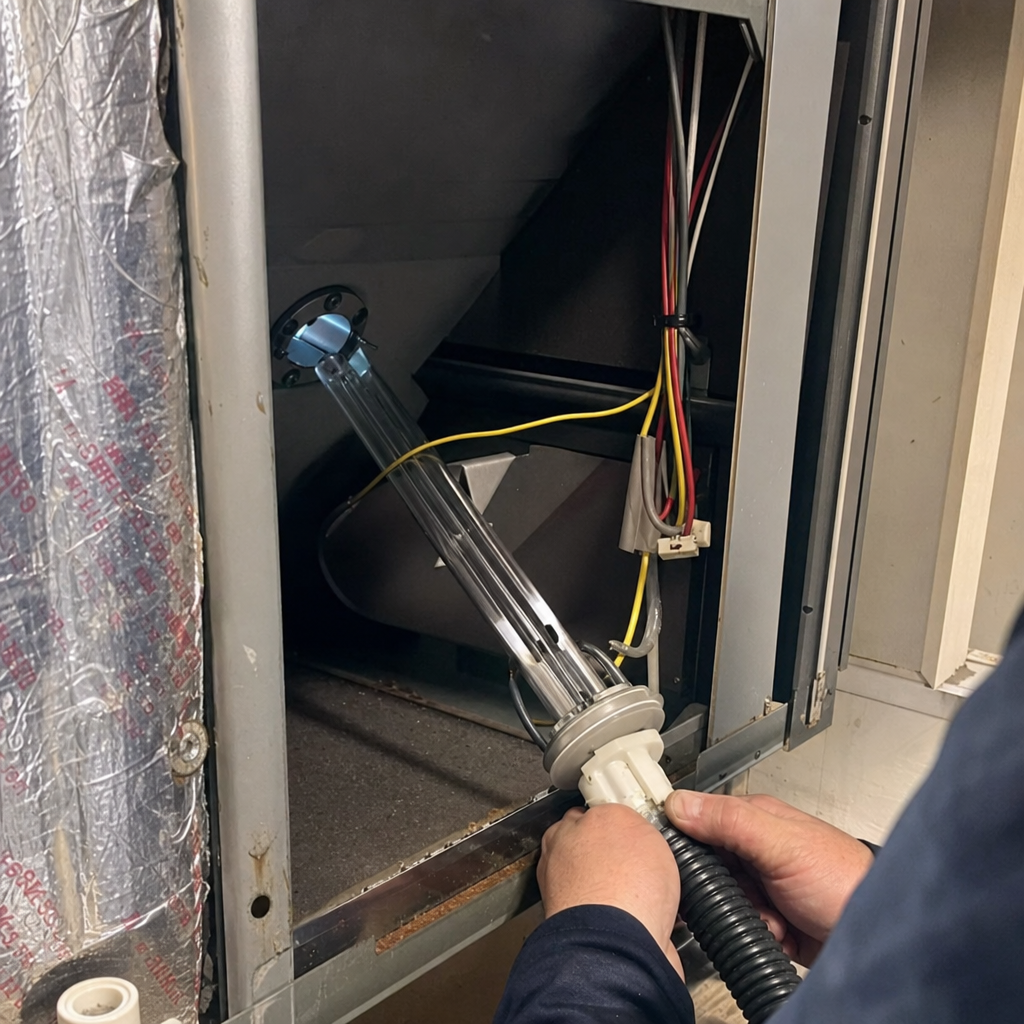
- EPA-registered sanitizing solution is applied as a fine mist to clean surfaces, where it neutralizes remaining biological contamination
- Dwell time allows the treatment to bond before airflow resumes
Skip step one and two, and you’re paying for a coating on top of grime — the antimicrobial can’t contact the actual duct surface, and the debris remains. Some competitors in the Columbus market offer “sanitizing specials” that are essentially a scented spray into a dirty system. If I wouldn’t put it in my own house, I won’t recommend it for yours.
The products we use — from Abatement Technologies and Guardsman — are formulated specifically for HVAC applications, not repurposed household disinfectants. They’re designed to adhere to metal and flex duct surfaces without leaving residue that could degrade air quality or corrode components.
When Sanitizing Adds Real Value Versus When It’s Unnecessary
Not every Columbus home needs sanitizing after every cleaning. We assess based on what we find during inspection — Paul runs the camera himself before quoting any work.
Sanitizing is warranted when we find:
- Visible mold growth or musty odor originating from ductwork, common in flex ducts running through hot Columbus attics where summer humidity creates condensation at cold supply registers
- Heavy pollen loading in homes with windows left open during August–September ragweed peak
- Pet dander accumulation in multi-pet households where allergen proteins adhere to duct surfaces
- Recent water intrusion or roof leak that affected HVAC components
- Post-construction cleanup where drywall dust and insulation fibers have been removed but biological residue from moisture exposure remains
Sanitizing is typically unnecessary when:
- The system shows only light dust accumulation with no moisture history or odor
- The home has had regular cleanings every 3–4 years with no intervening water events
- The homeowner’s primary concern is simple dust reduction, not allergen or microbial control
In the older Linden and Hilltop neighborhoods, we regularly encounter 1950s–60s ranch homes where forced-air gas conversion was grafted onto original oversized gravity-flow trunk lines. These massive rectangular ducts — sometimes from the coal-heat era — can hold decades of compacted particulate. Extended dwell time and manual agitation add significant job time that flat-rate pricing rarely accounts for. Sanitizing these systems after thorough cleaning provides meaningful biological control in ductwork that would otherwise continue recirculating aged contamination.
How Much Does Air Duct Sanitizing Service Cost in Columbus?
Pricing depends on system size, accessibility, and whether sanitizing is paired with a full cleaning or performed as a standalone service on previously cleaned ducts. See our 2026 air quality and sanitizing cost guide for Columbus, OH for detailed pricing factors. The table below reflects our current Columbus market rates:
| Service | Low Range | High Range |
|---|---|---|
| Air duct sanitizing (add-on to full cleaning) | $150 | $250 |
| Standalone sanitizing service (pre-cleaned system) | $275 | $495 |
| Sanitizing with mold-specific EPA treatment | $325 | $575 |
| Dryer vent sanitizing (paired with duct service) | $75 | $125 |
| HVAC coil and cabinet sanitizing | $150 | $225 |
Homes in the post-1990 suburban rings — New Albany, Grove City, the newer Dublin builds — typically have more accessible flex-duct systems that clean and sanitize faster. The 1940s–1960s stock in Hilltop, the South Side, and Near East Side with rigid metal trunk lines and limited access panels often require additional labor, which we quote upfront after camera inspection. No surprises.
Call (844) 945-2561 for an exact quote — estimates are free, and Paul handles the inspection personally.
What to Look For in a Columbus Air Duct Sanitizing Service
The air duct cleaning category in Columbus is crowded with generalist handymen, carpet cleaners who added duct work, and franchise operations running rotating crews. Here’s how to find the best air quality and sanitizing in Columbus, OH and distinguish a legitimate service from a theatrical upsell:
They clean before they sanitize. Any quote for sanitizing without prior mechanical cleaning is a red flag. The antimicrobial needs clean surface contact to work — spraying into debris is wasting your money.
They name their equipment. Professional-grade systems like our Rotobrush and Nikro mechanical agitation platforms aren’t consumer vacuums with a brush attachment. Ask specifically what mechanical cleaning equipment precedes the sanitizing step.
The owner does the work. Paul Torres shows up personally as lead technician on your job — customers get the most experienced person in the company doing the actual work, not a rotating crew of subcontractors who may not understand Columbus’s specific housing stock challenges.
They explain the product. EPA-registered HVAC sanitizers from recognized manufacturers like Abatement Technologies or Guardsman have specific application protocols, dwell times, and safety data sheets. A technician who can’t name the product or explain why it was selected isn’t performing targeted treatment.
They address your specific system type. A company quoting identical pricing for a 2,000-square-foot flex-duct home in Pickerington and a 1950s ranch with coal-era trunk lines in Linden hasn’t looked at your system. The inspection should inform the quote.
Can You Just Sanitize Instead of Cleaning Your Ducts?
No — sanitizing is not an annual substitute for cleaning, and it doesn’t eliminate the need for mechanical agitation and vacuum extraction. This is the most common misconception we correct during Columbus home inspections.
The antimicrobial solution we apply is designed for biological control on clean surfaces. It doesn’t dissolve dust, dislodge construction debris, or remove pet hair accumulations. A sanitizing treatment applied to dirty ducts creates a potentially worse situation: the liquid carrier in the solution can bind with loose particulate, creating clumped residue that restricts airflow and provides new substrate for future microbial growth.
We recommend cleaning every 3–5 years for typical Columbus homes, with sanitizing added when specific biological concerns exist — mold history, allergy flare-ups during ragweed season, post-water-intrusion recovery. Some homeowners in high-pollen areas like the open developments around New Albany choose to sanitize after every second cleaning cycle. The right interval depends on your home’s conditions, not a calendar.
Why Columbus’s Housing Stock Demands Specialist Knowledge
Columbus has been one of the fastest-growing large cities in the Midwest since 1990, producing vast rings of builder-grade tract homes where flexible ductwork was installed and never cleaned post-construction. Unlike older Rust Belt neighbors like Cleveland or Dayton, Columbus’s dominant housing stock is 1990s–2010s flex-duct systems run through hot, unconditioned attic spaces — these sag, kink, and trap drywall dust and insulation fibers from original construction that circulates until a first professional cleaning.
This matters for sanitizing because flex duct presents different challenges than rigid metal. The corrugated interior surface traps more debris and provides more colonization sites for mold. Mechanical agitation must be thorough enough to reach these crevices, and sanitizing application must account for the porous surface texture. Our Nikro systems are specifically selected for this — consumer-grade equipment designed for smooth metal trunk lines often misses flex-duct contamination entirely.
Meanwhile, the inner-ring neighborhoods with 1940s–1960s rigid sheet-metal systems present their own issues: converted gravity-flow trunks with seams and joints that never sealed properly for forced-air pressure, decades of layered particulate from multiple heating system generations, and access limitations that make complete cleaning genuinely difficult. Sanitizing these systems without addressing the mechanical debris first is particularly ineffective — the biological load sits beneath compacted dust layers the spray never penetrates.
FAQs
Air duct sanitizing service in Columbus costs $150–$250 as an add-on to a full cleaning, or $275–$495 as a standalone treatment on a previously cleaned system. Mold-specific EPA-registered treatments run $325–$575. The final price depends on system size, duct accessibility, and whether your home has typical flex duct or older rigid metal trunk lines requiring extended labor. Call (844) 945-2561 for an exact quote — estimates are free.
No — sanitizing without prior mechanical cleaning is ineffective and potentially counterproductive. The antimicrobial solution needs clean surface contact to bond and neutralize biological contamination; spraying into dirty ducts wastes product, fails to reach the actual duct wall, and can create clumped residue that restricts airflow. We perform sanitizing only after Rotobrush or Nikro mechanical agitation and negative-pressure vacuum extraction.
Yes, specifically during late August through October when Columbus ragweed pollen peaks and HVAC systems transition from cooling to heating. Sanitizing after mechanical cleaning neutralizes allergen proteins and mold spores that vacuuming alone leaves behind. We’ve found the highest customer-reported relief in homes where cleaning plus sanitizing is performed in late summer, before the heating season begins recirculating accumulated biological load. It’s not necessary for every cleaning cycle, but it’s the most impactful single intervention for seasonal allergy sufferers.
Standalone sanitizing on a pre-cleaned system takes 1.5–2.5 hours for a typical Columbus home. When performed as part of a full cleaning and sanitizing service, total job time runs 3–5 hours. We recommend waiting 2–4 hours after application before restarting your HVAC to allow proper dwell time and initial drying. Paul will give you a specific timeline based on your system size and the product used — we don’t leave until you’re clear on next steps.
Ready to Clear What’s Been Circulating?
If you’re noticing allergy symptoms, musty odors when the system kicks on, or it’s simply been years since your ducts were professionally addressed, let’s look at what you’re actually breathing. Paul Torres handles every inspection personally — no salespeople, no subcontractors, no scripted upsells. Nearly 1,000 customers reviewed us at 4.7 stars because we tell you straight what needs work and what doesn’t. Call (844) 945-2561 for a free estimate on air duct sanitizing service in Columbus, or explore our full Air Quality & Sanitizing options to see how we handle your entire indoor air system.
Written by Paul Torres, Owner & Lead Technician at Legacy Air Duct Cleaning Columbus, serving Columbus, OH.