
Duct Sealing Cost in Columbus, OH: What You’ll Actually Pay in 2024
If you’re wondering how much duct repair and sealing costs in Columbus, OH, prices typically run between $900 and $2,800 for a full residential system, with most single-family homes in the $1,200–$1,800 range depending on access, duct condition, and whether we’re sealing existing connections or replacing collapsed flex-duct sections. Call (844) 945-2561 for a free in-home estimate – we’ll inspect your attic layout and give you an exact number before any work starts.
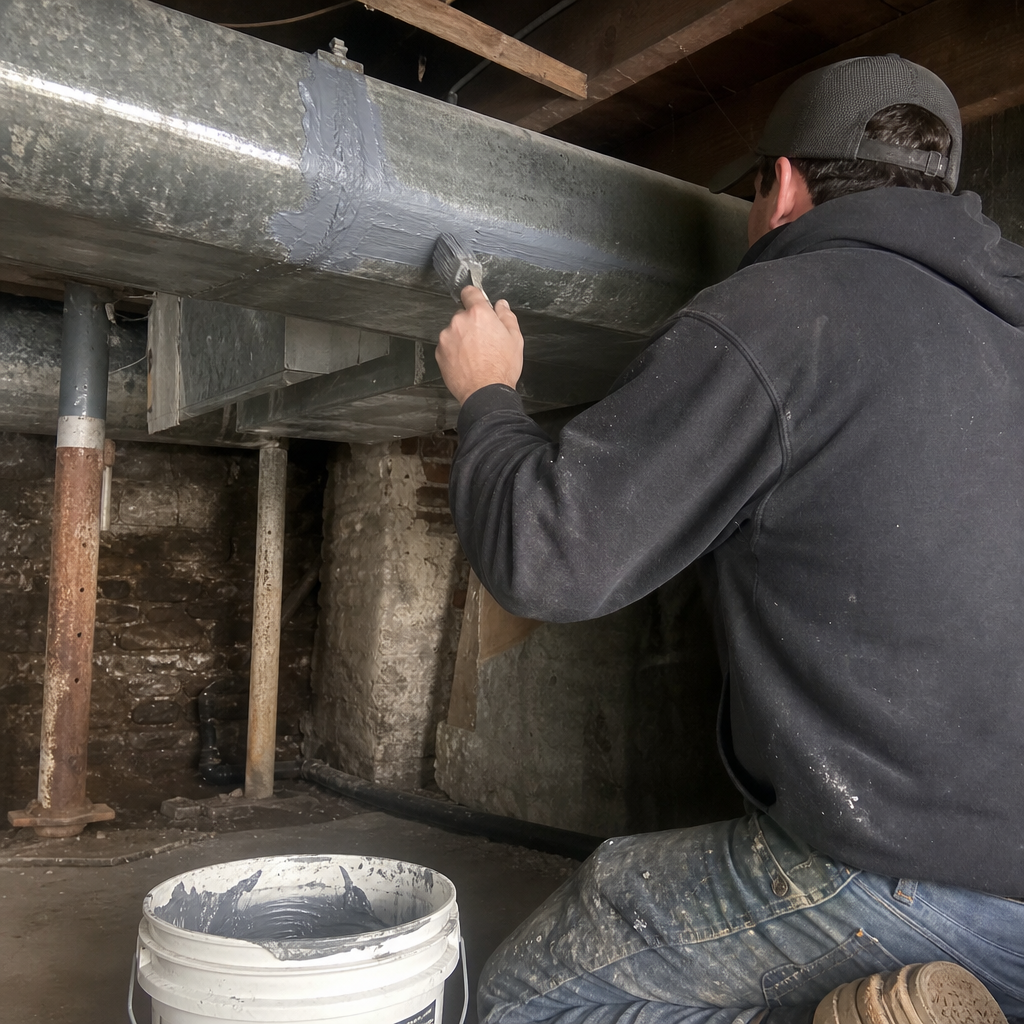
Here’s what most pricing pages won’t tell you: Columbus’s housing stock is uniquely vulnerable to duct leakage. The rings of post-1990 builder-grade homes in Hilliard, Dublin, Pickerington, New Albany, and Grove City were built with flexible ductwork strung through unconditioned attics – and after 25–30 years of Ohio heat cycles, the original tape and zip-tie connections have dried, sagged, and started bleeding conditioned air into spaces that hit 130°F in July. We’ve put our hands on enough attic ducts in Columbus to know: you can feel the loss before you measure it.
Why Columbus Homes Lose More Duct Air Than the National Average
The Department of Energy estimates that typical U.S. homes lose 20–30% of conditioned air through duct leaks. In Columbus, we regularly see losses at the higher end – sometimes pushing 35% – because of how this market built out.
While older Rust Belt cities like Cleveland or Dayton have more pre-1970 housing with rigid sheet-metal systems, Columbus has been one of the fastest-growing large cities in the Midwest. That growth produced vast rings of tract homes with flex duct installed fast, run through hot attics, and rarely cleaned after construction. The original connections were made with mastic tape over zip ties – adequate for a few years, not for three decades of thermal expansion and summer humidity.
The sagging you see from the attic hatch isn’t just unsightly – it’s a measurable energy drain.
Our climate makes it worse. Columbus sits with July dew points regularly in the upper 60s°F, and that humidity promotes mold colonization inside flex ducts and near cold supply registers that sit against warm attic air. When we open a system that’s never been professionally cleaned, we find drywall dust and insulation fibers from original construction still circulating – debris that also interferes with sealant adhesion if you try to seal over it.
What Duct Sealing Actually Involves (and What Drives the Price)
“Duct sealing” isn’t one procedure. It’s a spectrum of repairs, and the cost scales with what your system actually needs. Here’s how we break it down when Paul inspects an attic:
| Service Component | Typical Cost Range |
|---|---|
| Spot sealing 3–5 register box connections with mastic | $350–$650 |
| Full trunk-line connection sealing (10–15 points) | $800–$1,400 |
| Flex-duct replacement for 1–2 collapsed/sagged runs | $400–$800 per run |
| Complete system seal + minor flex replacement | $1,500–$2,800 |
| Duct cleaning + sealing combined service | $1,200–$2,200 |
The low end covers targeted work: mastic sealant applied to register boxes where flex meets the ceiling drywall, or re-securing trunk-line takeoffs that have separated. The high end involves replacing sections of flex duct that have kinked, collapsed, or pulled entirely free – common in Columbus attics where original installation left too much slack or too little support strapping.
We use professional-grade Duct Repair & Sealing protocols on every job, including Nikro mechanical agitation systems for pre-seal cleaning and Guardsman-rated sealants rated for the temperature swings of Ohio attics. If I wouldn’t put it in my own house, I won’t recommend it for yours.
Why Cleaning Must Come Before Sealing
This is where most homeowners get tripped up – and where competitors who only seal (or only clean) create problems.
Sealing over debris-coated duct connections traps contamination inside and reduces sealant adhesion. The mastic won’t bond properly to a layer of compacted dust, construction debris, or mold film. We’ve been called to jobs where another company sealed first, and within two seasons the sealant was peeling because the surface underneath was never prepped.
Our process runs in sequence:
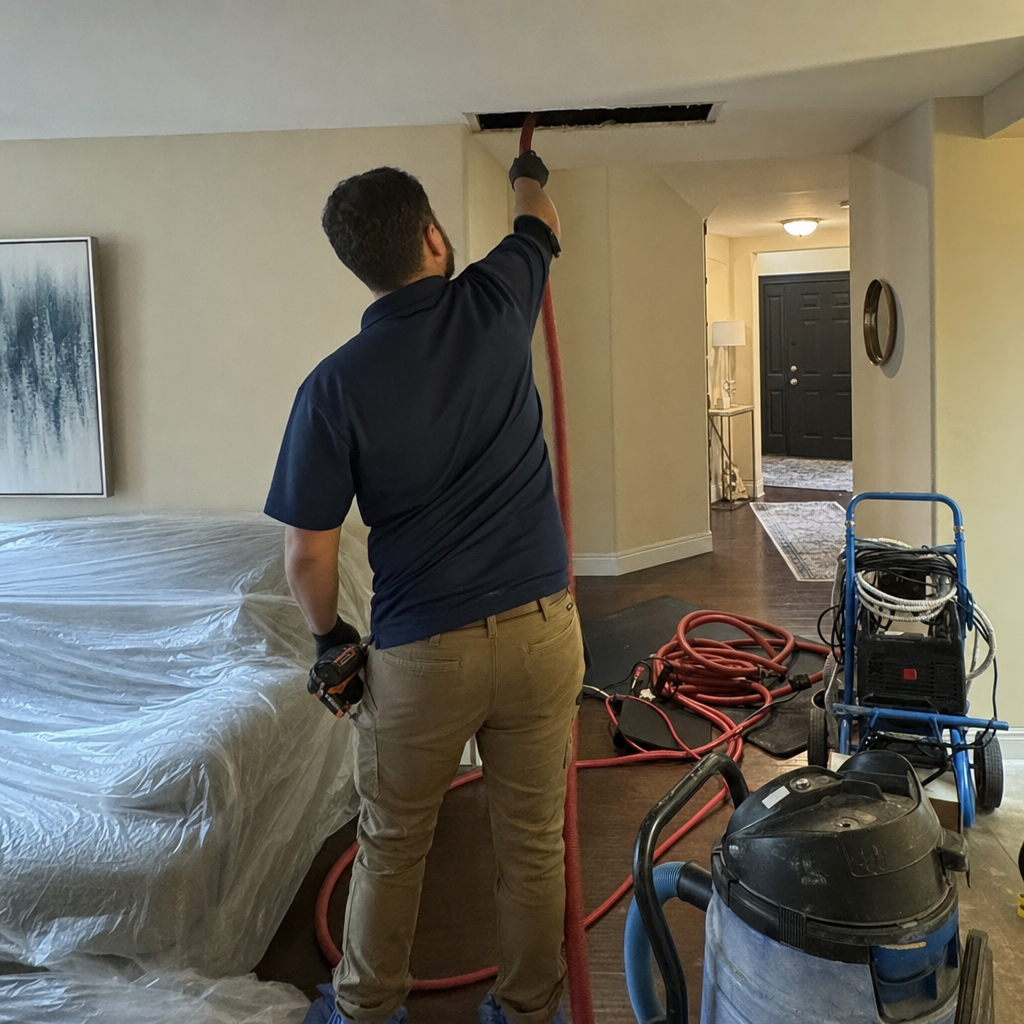
- Inspection: Paul crawls the attic with a camera, mapping every connection point and identifying which have separated, which are sagging, and which are still sound.
- Cleaning: We run the Rotobrush through each supply and return line, dislodging debris with mechanical agitation and negative-pressure extraction. This removes the contamination that would compromise a seal.
- Sealing: With clean surfaces, we apply mastic at register boxes, trunk connections, and any repaired flex-duct joints. The sealant cures to a flexible, durable bond that handles thermal cycling.
- Verification: We pressure-test the sealed system to confirm leakage rates have dropped to acceptable levels – typically targeting below 10% of total airflow.
Doing both under one roof matters. When Paul identifies sealing needs during a cleaning inspection, he can address them in the same visit. You don’t coordinate a second contractor, pay a second trip charge, or discover three months later that your “clean” ducts are still leaking 30% of your conditioned air into the attic.
The Payback Math Columbus Homeowners Should See
A sealed duct system in an Ohio home that runs AC from May through September and heat from October through April can reduce HVAC energy loss meaningfully. The Department of Energy’s duct leakage estimates – that 20–30% of energy is wasted – translate to real dollars when you’re heating against January lows in the teens and cooling against August humidity.
We’ve had customers in Hilliard and Dublin report utility drops of $40–$80 per month after full sealing, especially when paired with a cleaning that restores original airflow capacity. At the midpoint of our typical sealing cost ($1,200–$1,800), that’s a 2–4 year payback on energy savings alone – before you count the extended HVAC equipment life from reduced runtime, or the avoided cost of a compressor replacement when your system runs 30% longer to hit setpoint.
The alternative – not sealing – costs more than the upfront price. You’re paying to condition your attic. In a 130°F July attic, that’s throwing money at air that never reaches your living space.
When Duct Sealing Isn’t Enough: Replacement vs. Repair
Some Columbus systems are past sealing. We’ve opened attics in Pickerington and Grove City where flex duct has collapsed entirely – crushed by storage boxes, chewed by squirrels, or simply sagging until the inner liner tore. In those cases, we quote replacement for the affected runs rather than attempting a seal that won’t hold.
The older housing stock in Hilltop, Linden, and the South Side presents a different challenge. Those 1940s–1960s ranches and bungalows often have rigid sheet-metal trunk-and-branch systems, sometimes converted from gravity coal-furnace ductwork with oversized 18-inch-plus trunk lines. These massive rectangular ducts can hold decades of compacted particulate and are nearly impossible to fully pressurize for a standard residential HEPA-vacuum pull. They require extended dwell time and manual agitation that adds significant job time most flat-rate pricing doesn’t account for.
We’ll tell you if sealing makes sense, if you need targeted replacement, or if the system’s condition means you’re better off budgeting for full ductwork down the road.
FAQs
For affordable duct repair and sealing in Columbus, OH, most homeowners pay between $1,200 and $1,800 for full-system work, with simpler spot-sealing jobs starting around $350–$650 and complex systems with flex-duct replacement reaching $2,800. The exact price depends on attic accessibility, number of connection points, and whether sections need replacement rather than sealing. Call (844) 945-2561 for a free in-home estimate – we’ll inspect your specific layout and give you a firm number.
Repair and sealing is almost always cheaper than full replacement – typically 40–60% less – but only when the duct material itself is intact. If flex duct has collapsed, torn, or degraded to the point that the inner liner is compromised, replacement of those specific runs is the only durable solution. We evaluate this on every inspection and won’t recommend sealing where it won’t last.
Yes – the Department of Energy estimates that sealing duct leaks can improve HVAC efficiency by 20% or more, and we’ve seen Columbus customers in unconditioned-attic flex-duct homes reduce seasonal utility costs by $40–$80 monthly. The payback period typically runs 2–4 years in central Ohio’s climate, faster if your system currently leaks at the high end of the range.
Absolutely – sealing over dirty connections traps contaminants inside and prevents proper sealant adhesion. We always clean first with our Rotobrush and Nikro mechanical agitation systems, then seal to clean surfaces. Doing both in one visit saves you a second trip charge and ensures the sealant bonds properly for long-term performance.
Get Your Exact Duct Sealing Estimate in Columbus
We’ve built our reputation on straight answers and owner-operated accountability. With nearly 1,000 customers reviewed and 8 years doing one thing well, we’ve earned recognition for the best duct repair and sealing in Columbus, OH – the trust Columbus homeowners rely on when the air their family breathes is on the line.
Call (844) 945-2561 today for a free estimate. We’ll inspect your attic ductwork, show you exactly where you’re losing conditioned air, and give you a firm price for sealing – no surprises, no pressure, just the same straight talk we’d want in our own homes.
Written by the team at Legacy Air Duct Cleaning Columbus.
What Our Customers Say
"My wife's allergies had been bad in this house since we moved in. It's been two months since they did the ducts and it's noticeably better. Not a miracle, but real."
- Adel Khalil"We got four quotes because the number involved was big enough to be worth the hassle. Two of them were clearly guessing. One was reasonable but couldn't start for a month. These guys were in the middle on price, could start the following week, and were the only ones who asked to see the actual problem area before quoting instead of estimating from my description. Work took a day longer than planned, which they told me about the morning it happened rather than after the fact. No change to the price."
- Maurice Coleman"Found a disconnected run in the crawlspace while they were in there and told me about it rather than cleaning around it."
- Carlos Torres